
Sports LED Screen
Unit LED provides sports stadium LED screens featuring a wide viewing angle, high safety, clear image quality, stable operation, and high refresh rate and contrast ratio for sporting events and real-time matches.


LED Display Price Calculator
Just fill the sizes, and get your LED display budget right now!
Choose the Best Stadium LED Screen for Sports Venues [2025]
Stadium LED screen is emerged as a critical component of modern sports venues, significantly enhancing the visual experience for spectators and fostering greater interactivity. These displays not only improve game visibility but also enrich event engagement through real-time data, highlight replays, and advertising content.
Here will delve into the key features of stadium LED screens, explore various applications, and provide guidance on selecting appropriate display solutions. Additionally, it will recommend a reliable LED display manufacturer specializing in sports LED screens and associated technologies, while offering installation guidelines and usage recommendations.
1. Overview of Stadium LED Screen
2. Key Features of Stadium LED Screens
3. Why LED Screens Are Essential for Modern Stadium Venues?
5. Application of LED Screens in Sport Venues
7. How to Choose the Best Stadium LED Screen?
8. Sport Perimeter LED Display Manufacturer Recommended
1. Overview of Stadium LED Screen
Stadium LED screen is a display technology specifically designed for sports venues and is widely used in large-scale sports events, live broadcasts, advertising displays, and interactive entertainment. Compared with traditional LCD or plasma display technologies, LED screens have higher brightness, longer service life, and stronger color performance. They can provide stable and clear visual effects in various environments, especially in bright sunlight outdoors.
Stadium perimeter LED display is not only used to display scores and event information, but also to present exciting replays, real-time data, interactive advertising, and social media content, greatly enhancing the audience’s on-site experience and interactivity. Modern sport LED displays are usually designed as modular structures, which can be flexibly configured according to the layout of the venue to adapt to different display needs and ensure that all spectators can enjoy clear visual effects from different angles.

In addition, the high efficiency and low energy consumption of stadium LED screens enable them to reduce energy costs in long-term operation. At the same time, they have a long service life and low maintenance costs, making them the preferred display solution for many modern stadium upgrades. The next section will explore the key features of stadium LED screens.
2. Key Features of Stadium LED Screens
Stadium LED screens have a unique set of key features that make them ideal for modern sports venues. Here are a few important features:
Feature 1. High brightness and visibility
Stadium LED displays usually have extremely high brightness, ensuring that the screen content is visible even in outdoor environments with direct sunlight. Not only does it help viewers to watch from a distance, but it also provides perfect visual effects during night games.
Feature 2. High-resolution and detailed performance
High resolution is another major feature of stadium LED screen. High-resolution screens can display delicate images and clear text, ensuring that even viewers far away from the screen can easily see scores, real-time data, and advertising information.
Feature 3. Durability and weather resistance
Outdoor stadium LED screen is usually highly waterproof, dustproof, and UV-resistant. They are specially designed to withstand extreme weather conditions such as heavy rain, strong winds, high temperatures, etc. The protection level of IP65 and above makes these screens perform well in harsh environments.

Feature 4. Low energy consumption and high efficiency
Compared with traditional display technologies, the energy efficiency of LED screens is much higher than other display technologies. This not only reduces energy consumption but also extends the service life of the screen. The low maintenance requirements and high efficiency of LED screens make them an ideal choice for long-term investment in sports venues.
Feature 5. Flexibility and customizability
Stadium perimeter LED displays usually adopt modular design, which can be flexibly configured and customized according to the needs of the venue. For example, the screen can be designed to be round, curved, or other irregular shapes to adapt to the spatial layout of different venues. In addition, the size, brightness, and color of the LED screen can be adjusted according to different needs to meet diverse display needs.

3. Why LED Screens Are Essential for Modern Stadium Venues?
LED screen plays a vital role in modern sports venues, which is mainly reflected in the following aspects:
① Improving audience experience: Stadium LED displays to provide high-brightness and high-resolution display effects so that spectators far away from the venue can also clearly see event information, real-time data, and exciting replays. This not only enhances the visual effect of watching the game but also allows every audience to participate in it and experience richer event content.

② Increasing interactivity and entertainment: Sport LED screen can display social media interactions, real-time voting, audience feedback, and other content, increase the interactivity of the event, and attract audience participation. In addition to events, screens can also be used to play advertisements, short films, or entertainment content to further enhance the entertainment atmosphere on site.
③ Increasing commercial value: As an advertising platform, perimeter LED display can effectively display sponsor information and brand advertisements. Through precise positioning of time, place and target audience, it helps venues increase advertising revenue and realize commercial operations.
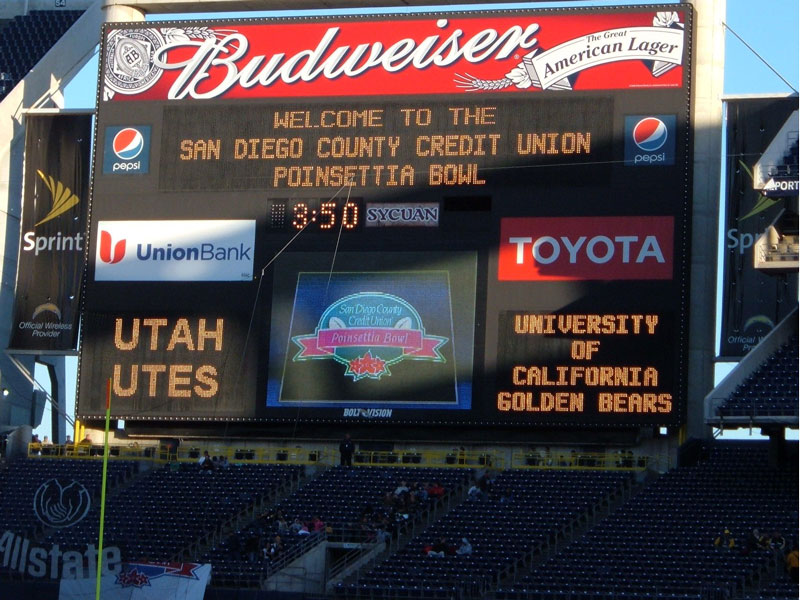
④ Versatility: Modern sports venues pay more and more attention to the versatility of screens. LED screens not only serve sports events, but can also be used in concerts, concerts, exhibitions and other activities to give full play to venue resources and improve utilization efficiency and revenue sources.
In short, LED screens are the key technology to enhance the stadium experience, realize commercial value and expand functions.
4. Types of Sport LED Display
Sports LED screens are categorized based on their application and function as follows:
① Full-color Sports LED Screen
These are common in various sports venues, offering high brightness and resolution for displaying diverse content like scores, real-time data, ads, and replays. They perform well whether day or night.

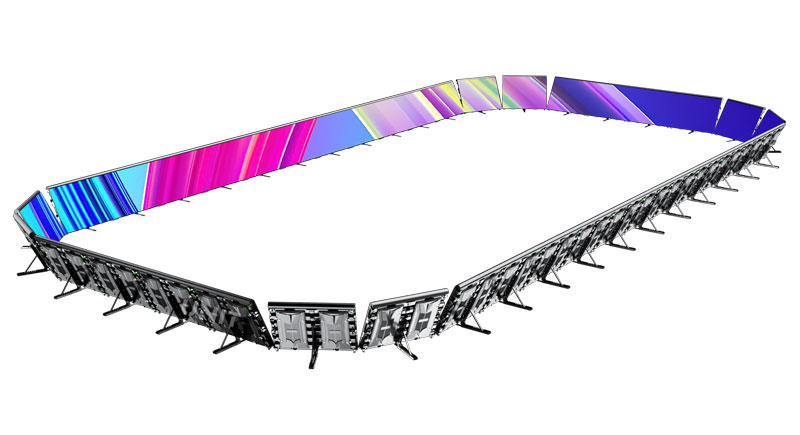
② Perimeter LED Screen
Installed along the edges or fences of sports venues, perimeter LED screens are primarily used for ads, event information, and interactive content. They are durable and can withstand harsh conditions, making them ideal for high-intensity sports like football and basketball.
③ LED Score Display
These screens are designed specifically for displaying game scores, time, and other real-time data. Typically placed in prominent locations, they offer high contrast and quick response times to ensure viewers have accurate information during the game.

④ In-venue Display Screen
Used to cover a large audience area, these screens are typically installed in multiple locations within the venue to show game content, ads, and instant replays. They are often found in large stadiums and arenas to provide a clear view for every spectator.

⑤ Football Stadium Screen
Installed around football fields, these screens focus on advertising. Controlled by software, they display diverse ads in a loop, creating a strong visual impact for spectators.

5. Application of LED Screens in Sport Venues
Stadium LED screen has a wide range of applications, covering multiple functional requirements of stadiums, mainly including the following aspects:
Application 1. Game information and real-time data display
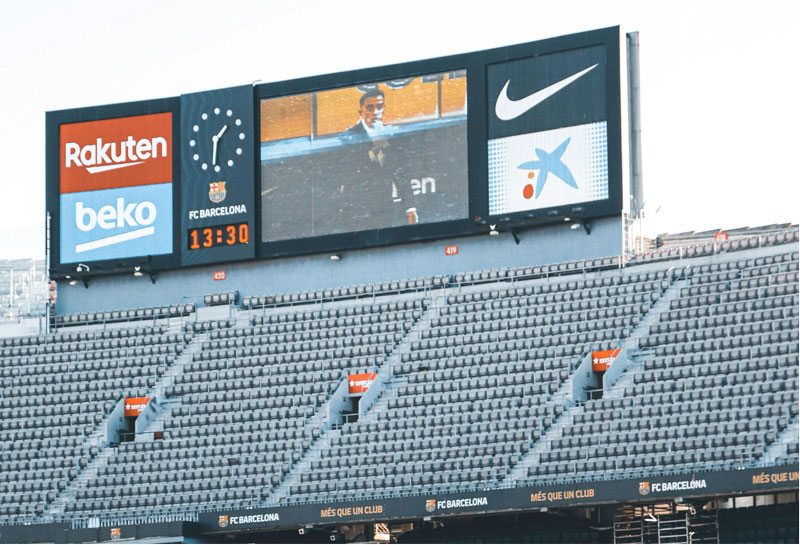
LED screens are widely used to display real-time scores, timing, and key data of the game, ensuring that every spectator can see the game’s progress. Such screens are usually installed in prominent areas on both sides of the field or near the stands to provide real-time updates.

Application 2. Advertisement and commercial display
LED screens in stadiums are widely used for advertising display. Multiple screens in the venue can play advertising content synchronously to help sponsors and brands gain exposure. In addition, the screen can also be used to display other commercial information in the venue, such as food and beverage promotions, peripheral product sales, etc.
Application 3. Event playback and instant replay
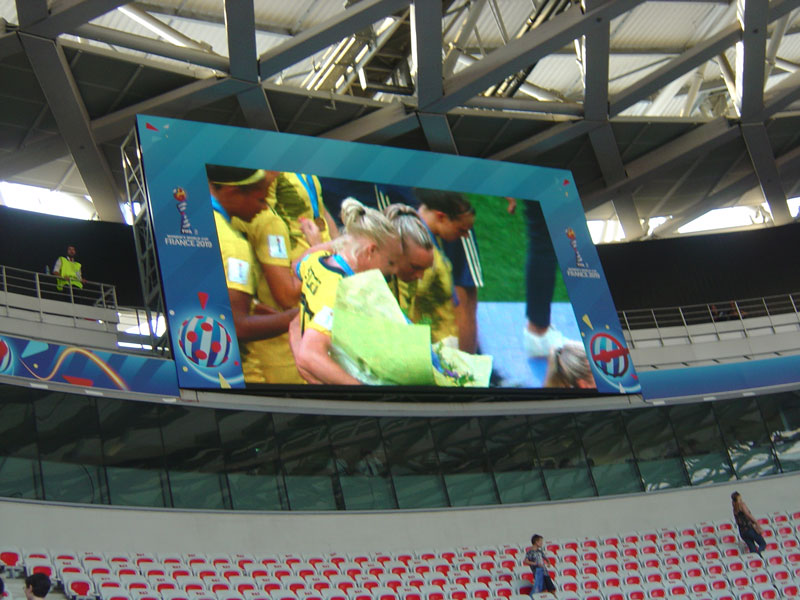
Stadium LED screen can display playback and instant replay of exciting moments during the game to enhance the audience’s viewing experience. Especially in fast-reaction events such as football and basketball, playback can help the audience better understand the details of the game, increase interactivity and entertainment.
Application 4. Peripheral information display
In addition to game data and advertisements, LED screens can also be used to display other peripheral information, such as traffic tips, weather forecasts, venue facility information, etc. LED screens installed at entrances, exits or passages can provide spectators with convenient venue navigation and real-time notifications, improving the venue’s service quality.

6. Stadium LED Screen Price
The stadium LED screen price is influenced by multiple factors, including screen dimensions, resolution, display technology, installation method, and brand.
- Firstly, the physical size of the screen has a direct impact on its cost. Larger venues necessitate bigger screens, which inherently come with higher price tags due to increased material and manufacturing costs.
- Secondly, resolution plays a critical role in determining the overall cost. Higher resolutions provide superior visual clarity but also increase expenses. Premium full-color displays and high-definition screens tend to be more costly as they incorporate advanced technologies and materials.

Beyond the initial hardware acquisition costs, ongoing maintenance and support expenses are crucial considerations. Regular inspections and maintenance are essential, particularly for outdoor installations where environmental protection measures such as waterproofing, dustproofing, and windproofing are vital.
Moreover, the brightness and display quality of the screen degrade over time, necessitating periodic replacement of damaged LED components. Maintenance costs encompass labor fees, component replacements, and routine equipment inspections.
In summary, the total cost of a sports LED screen encompasses both the initial purchase price and long-term maintenance and support expenses. Selecting appropriate products and services can effectively minimize operational costs while ensuring equipment stability and reliability.
7. How to Choose the Best Stadium LED Screen?
Choosing the right stadium LED screen is crucial to improving venue operation efficiency and audience experience. Here are a few key considerations:
① Screen size and resolution: According to the size of the venue and the distribution of the audience seats, choose a screen of appropriate size and high resolution to ensure that spectators far away from the venue can also see the content.
② Screen brightness: The screen brightness must be high enough to cope with the needs of outdoor strong light or daytime events, and ensure good visual effects under different lighting conditions.
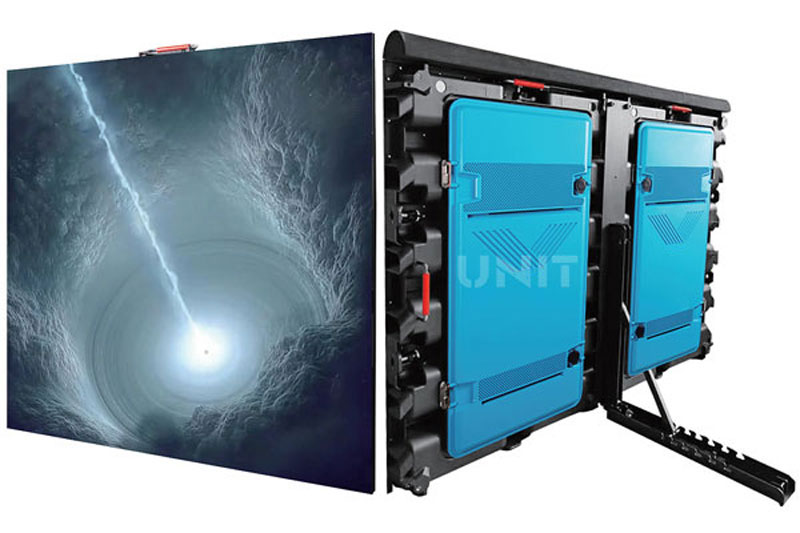
③ Durability and protection level: Choose a screen with high waterproof, dustproof and shockproof performance to ensure long-term use and stability in harsh environments, especially when installed outdoors.
④ Installation and maintenance costs: Choose a system that is easy to install and maintain to reduce later technical expenses and labor costs.

⑤ Brand and technical support: Choose products from well-known brands to ensure reliable quality and perfect technical support, and solve problems in installation and operation promptly.
⑥ Energy efficiency and environmental protection: Pay attention to the energy efficiency level and environmental protection certification of the screen, choose energy-saving and environmentally friendly LED screens, reduce energy consumption and operating costs, and help sustainable development.
To sum up, choosing a suitable stadium LED screen should take into account technical performance and actual needs to ensure the best cost-effectiveness and user experience.
8. Sport Perimeter LED Display Manufacturer Recommended
Optimizing the selection of a dependable LED display manufacturer for high-intensity sports venues is essential.
UNIT, an experienced and professional LED display manufacturer, specializes in outdoor LED screen, indoor LED screen, LED screen rental, or sports LED screen, etc. Their customized solutions feature advanced high-brightness and high-resolution technology, ensuring clear visibility of advertisements and event information under diverse lighting conditions. UNIT’s products are extensively utilized in various sports facilities, including football fields and basketball courts, delivering superior performance even under demanding usage scenarios.
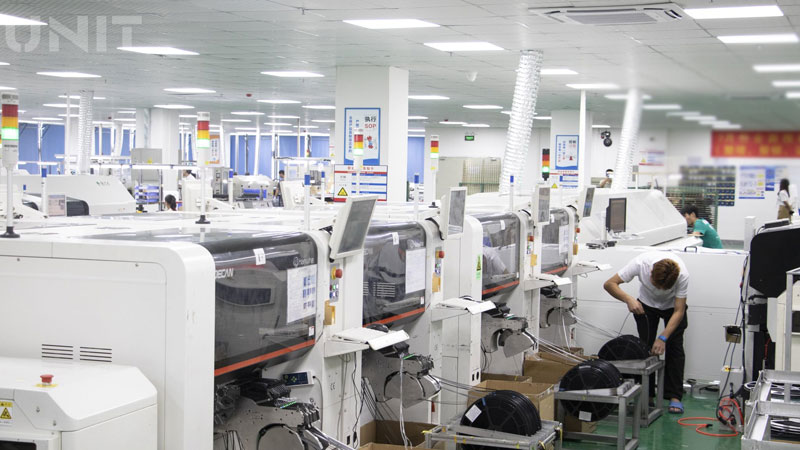
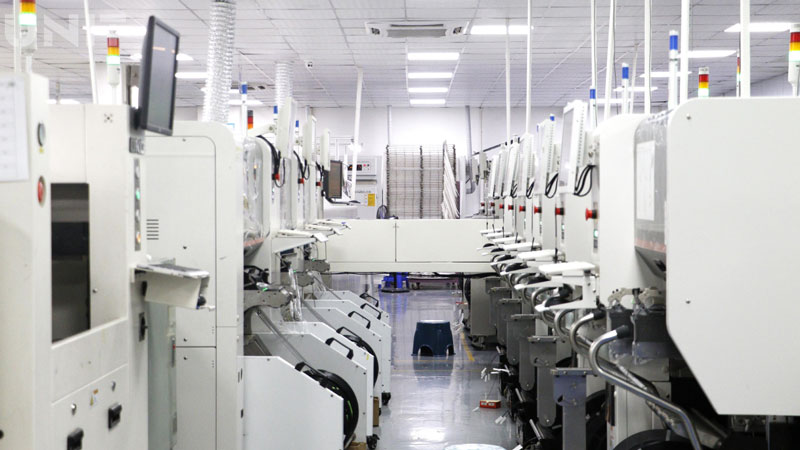
In addition to evaluating screen performance and quality, it is crucial to consider the manufacturer’s after-sales service and technical support. UNIT has earned a strong reputation in the industry for providing comprehensive technical assistance, guaranteeing the long-term reliability and stable operation of your stadium LED displays.
9. UNIT Stadium Perimeter LED Display Solution
Why Choose UNIT?
● Global Recognition: UNIT is a globally recognized provider of high-quality, budget-friendly LED display solutions.
● Certifications: Our products are certified with CE, EMC-B, FCC, RoHS, and IECEE, ensuring top performance.
● Global Market Expansion: We have expanded into markets in Europe, America, South Korea, and Thailand, completing over 10,000 projects.
● Advanced Manufacturing Facility: Our 12,000-square-meter factory features advanced equipment and strict quality control.
● Commitment to Excellence: We are dedicated to R&D, manufacturing, and sales of superior LED displays.
UNIT Stadium LED Display Solution
EV960-S Series Energy Saving Sports LED Display
- 960mm*960mm Standard Cabinet Size
- Energy Efficient LED Display
- High Protection Aluminum Chassis Panel Design
- Dual Maintenance Design
- 90° Adjustable Angle

MA960-S Series Sports LED Display
- Magnesium Alloy Cabinet Design
- With Silicone Top Cover
- High Waterproof & Anti-impact Ability
- High Flatness & Easy Installation and Disassembly
- 0-90° Adjustable Supporting Bracket
EX1600-S Series High Quality Sports LED Display
- 1600*960mm Cabinet Size
- P6.67mm, P8mm, P10mm Availabl
- Light Metal Alloy Material
- Energy Saving LED Display
- High Waterproof & Anti-impact Ability

Case Review
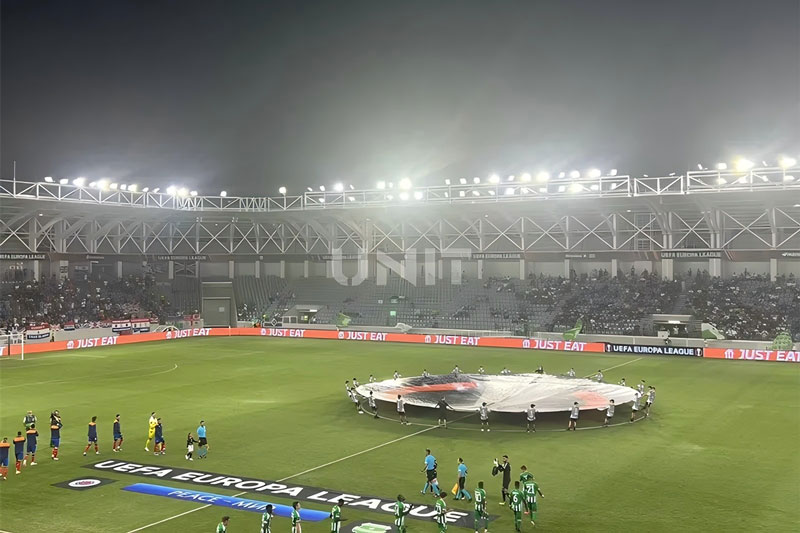
Case 1. P10mm LED Perimeter Display in Cyprus
- Installation Country: Cyprus
- Pixel Pitch: P10mm
- Cabinet Size: 1600X900mm
- Application: Football Game
- Refresh Rate: 3840Hz
- Product: OF800-S
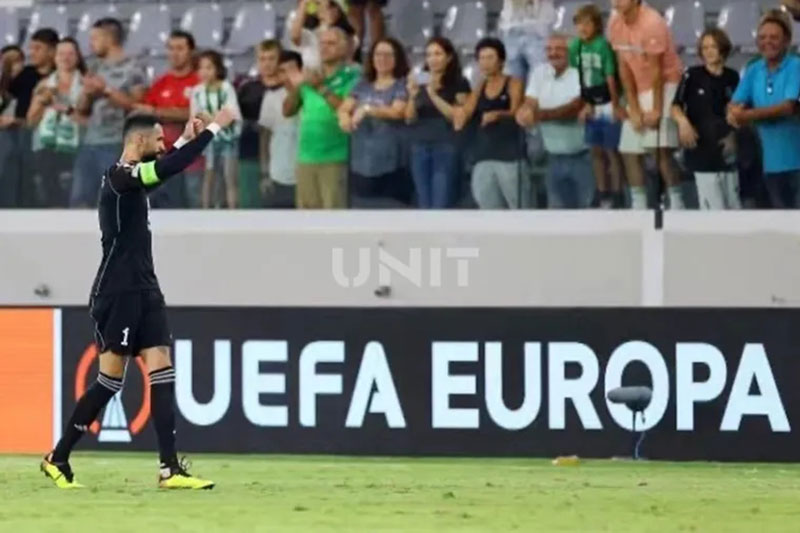
Case 2. P10mm Sports Perimeter LED Display
- Installation Country: Georgia
- Pixel Pitch: P10mm
- Cabinet Material: Magnesium alloy
- Cabinet Size: 960X960mm
- Application: Football Game
- Product: MA960-S
More Cases
10. Using Tips
In sports events, the rational application of LED displays can significantly enhance the audience and participants’ experience. To maximize its effectiveness, please refer to the following key suggestions:
Tip 1. Select the appropriate type of LED display: Based on the event’s specific requirements, choose the most suitable display, such as scoreboards, side screens, video walls, or stock market displays.
Tip 2. Optimize screen positioning and visibility: Place the display strategically at the optimal viewing position to avoid obstructions or buildings affecting the line of sight.
Tip 3. Use high-quality content: Employ high-resolution images and videos to ensure clear and vivid visual effects, enhancing the audience’s sense of immersion.
Tip 4. Diversified content: Combining live game footage, replays, advertisements and social media information to maintain the audience’s interest and engagement.
Tip 5. Adjusting Brightness and Contrast: Adjust the brightness and contrast according to the on-site environment to ensure good visibility whether in strong sunlight or at night.
Tip 6. Comprehensive testing before the event: Before the event starts, it is essential to conduct a thorough inspection and test of all LED displays to ensure smooth operation and make timely adjustments to address any potential issues.
11. Conclusion
Stadium LED screen plays a crucial role in modern sports venues by enhancing audience visual experiences and providing an efficient platform for event information and advertising. Proper selection, installation, and maintenance maximize performance and lifespan. With professional support and ongoing innovation, these screens will drive the digital transformation of the sports industry and become essential in future venues.
